
USDA Historical Poultry House Plans
These are some historical USDA documents on poultry houses that reflect the knowledge of the time that Robert Frost was working as a small chicken producer.
Poultry Management
Gowell, Gilbert Mottier, 1904
"This bulletin contains an account of the methods of poultry management in use at this Station, including methods of incubation, treatment and housing of young chicks, a description of the warmed and curtained front houses, the trap nests, and methods of feeding laying hens."
Poultry Experiments
Gowell, Gilbert Mottier, 1907
"This bulletin contains an account of the brooder houses, houses for hens, and the methods of feeding used at the Station; the Maine Station trap nest; and a feeding experiment with whole vs. cracked corn."
Poultry House Construction
Alfred R. Lee, 1914
"This article explains the essential principles of poultry-house construction, showing pictures of houses and fixtures which have given satisfaction in various sections of the country, with their plans and specifications; and contains hints on construction which will assist the poultryman in planning and erecting his buildings."
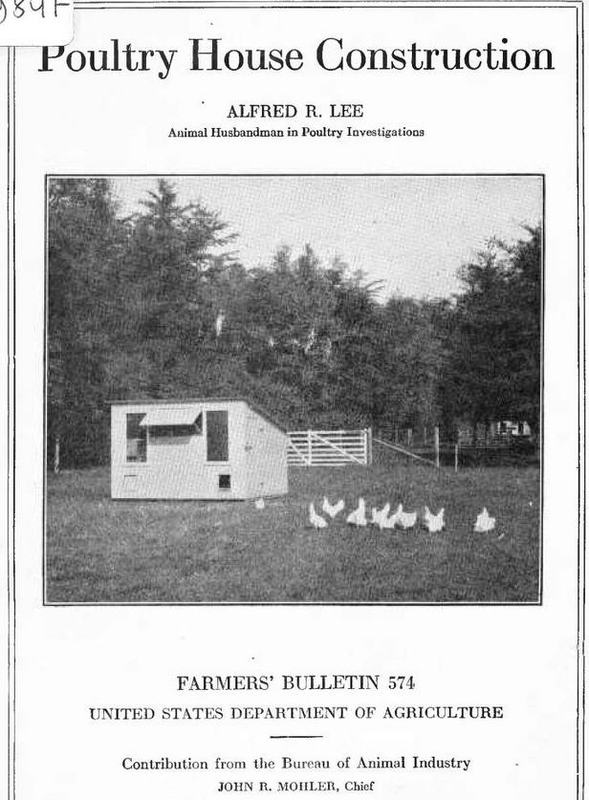
Poultry House Construction
Alfred R. Lee, 1918
"Hens need a comfortable house which is dry and roomy and abundantly supplied with fresh air and sunlight. It never pays to overcrowd the fowls.
Small or colony houses and long laying houses make good quarters for hens, the best type depending on conditions."
Poultry Houses
Lee, Alfred R., 1923
"Poultry houses or other buildings where fowls are kept should be dry, well ventilated, free from drafts, with plenty of sunshine and room enough to allow the birds to move about with freedom and comfort. These are necessary factors, in fact much more important than the kind or style of building used, if the fowls are to be kept healthy, vigorous, and productive. Poultry houses are built in a variety of shapes and sizes, and often old buildings are built over or remodeled into poultry houses, all giving about the same results, which indicates that no fixed type of building can be recommended as superior to all others if proper ventilation, light, and other essentials here referred to are provided."
Poultry House Construction
Lee, Alfred R., 1924