
Trap Nests and the Frost Stories
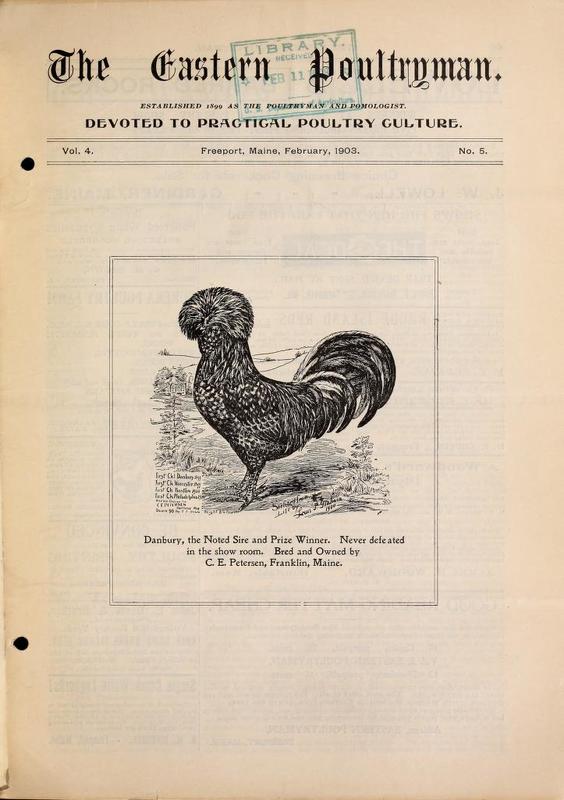
Trap Nests, page 71
"...They are like ordinary nests, except that they have doors like a bootjack hanging on hinges from the top, the points of the inverted 'V' resting on the inside of a sill so that it can only open inward."
"Very well, we will make them, and then none of the old maids in the neighborhood will be any the wiser."
So the trap nests were installed. The hens took the opposite side of the pen and craned at them with a scandalized cackling, and then forgot them, and went about their business---which was not laying...."
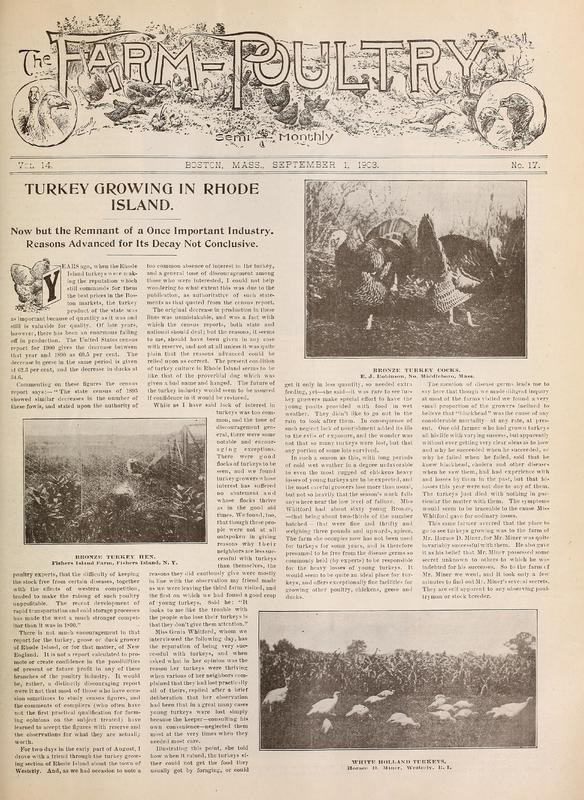
The Original and Only, page 352
"…Suddenly I saw the trap nest in a new light. Before that it had been associated in my mind with big egg stories and line breeding for eggs. But it has no necessary connection with either. One needn't abuse his trap nests to make his hens too prolific for the stamina of the stock, if such a thing is possible; neither need he lie about their findings, neither he tell the truth about them if the truth is so remarkable as to look like a lie. He could keep his mouth shut in that case. There may be such a thing as a 300-egg hen, but I'm not going to be the fellow to say so…."
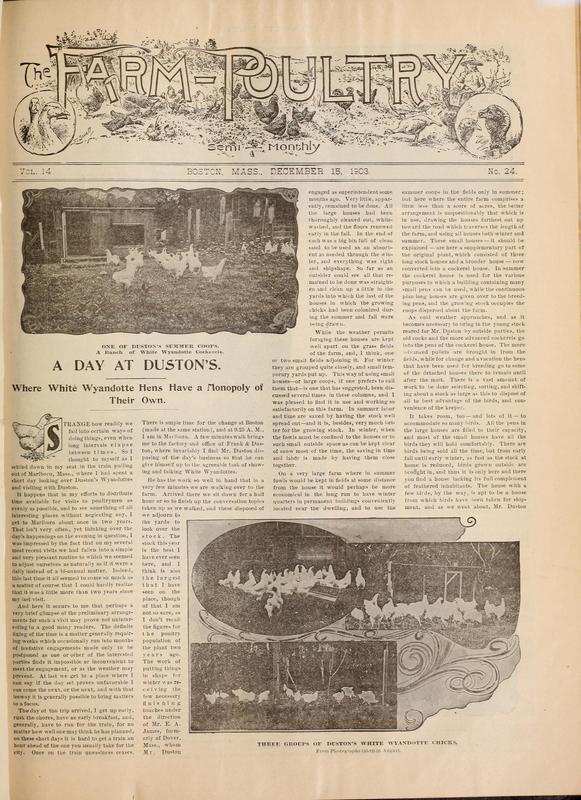
Three Phases of the Poultry Industry, page 481
"…It is interesting to know just how much Dr. Bricault pretends to devote himself to the trap nests. At this time of year all his nests are frankly and shamelessly fastened open. The record keeping ceased in July. He will base his opinion of the hens on their work for the nine months preceding. From November to July he was a slave to the trap nests—not absolutely, but more or less, and within reason. He made no bones of taking a day off occasionally. He is not a scientist, but a business man, and attempts only the practicable. His records then lay no claim to scientific accuracy, but are thought to serve the purpose if they discriminate roughly among the good, bad, and indifferent layers…."
Trap Nests were used to track of the egg-laying frequency of each hen and to help breeders identify the eggs of the most prolific bird so they could be set aside for special treatment.
W.O. Wilson describes trap nests as becoming increasing popular in the early 1900s in an essay from American Poultry History 1823-1973. The first design was patented in 1899 and staff in various Agricultural Experiment Stations in Maine, Utah, North Carolina, and New York made further refinements and improvements.
Two of the Maine Station Bulletins appear below; they include descriptions, photographs, and test results.
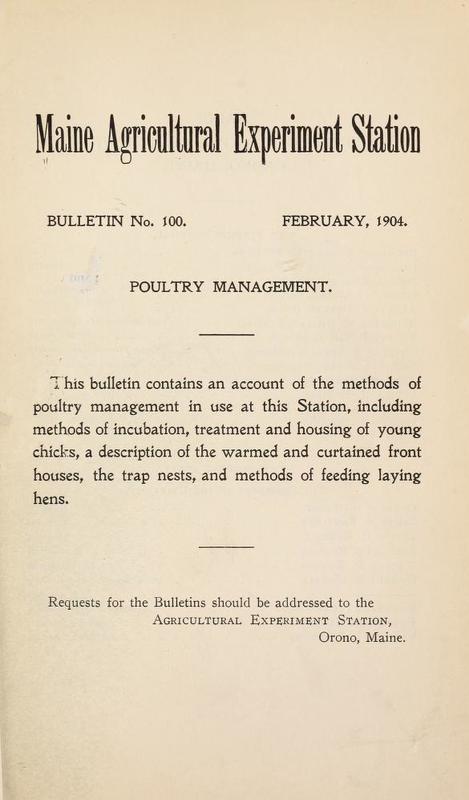
Poultry Management, 1904
Gilbert Mottier Gowell, University of Maine
Maine Agricultural Experiment Station, Bulletin Number 100
"This bulletin contains an account of the methods of poultry management in use at this Station, including methods of incubation, treatment and housing of young chicks, a description of the warmed and curtained front houses, the trap nests, and methods of feeding laying hens."
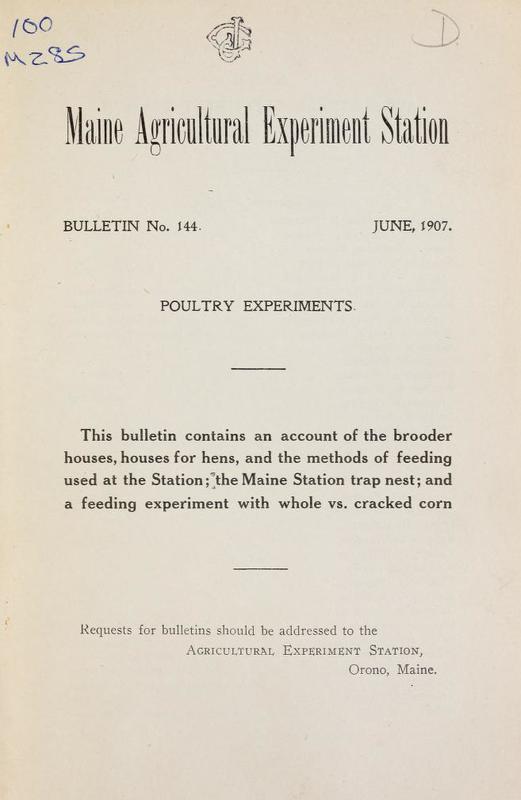
Poultry Experiments, 1907
Gilbert Mottier Gowell, University of Maine
Maine Agricultural Experiment Station, Bulletin Number 144
"This bulletin contains an account of the brooder houses, houses for hens, and the methods of feeding used at the Station; the Maine Station trap nest; and a feeding experiment with whole vs. cracked corn"
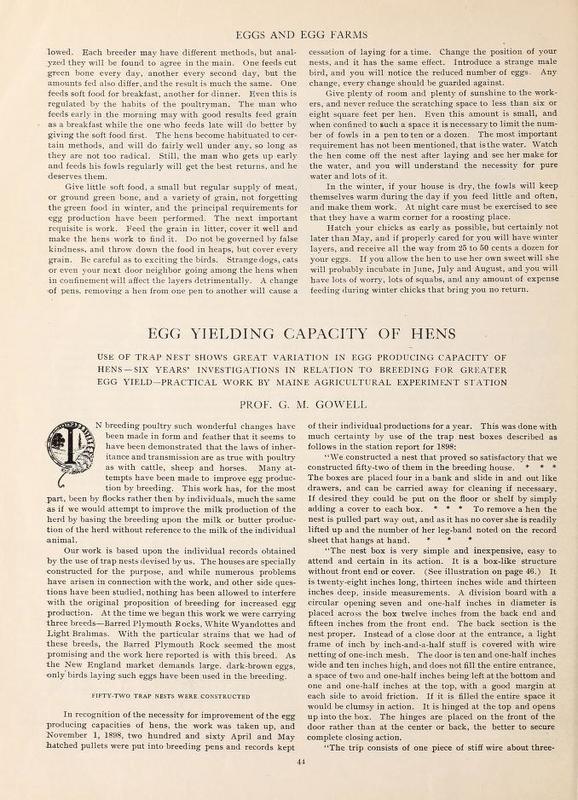
Egg Yielding Capacity of Hens, Eggs and Egg Farms, 1907, pp. 44-50
Gilbert Mottier Gowell, University of Maine
"Use of trap nests shows great variation in egg producing capacity of hens -- Six years' investigations in relation to breeding for greater egg yield -- Practical work by Maine Agricultural Experiment Station.
In breeding poultry such wonderful changes have been made in form and feather that it seems to have been demonstrated that the laws of inheritance and transmission are as true with poultry as with cattle, sheep and horses. Many attempts have been made to improve egg production by breeding. This work has, for the most part, been by flocks rather then by individuals, much the same as if we would attempt to improve the milk production of the herd by basing the breeding upon the milk or butter production of the herd without reference to the milk of the individual animal. Our work is based upon the individual records obtained by the use of trap nests devised by us. The houses are specially constructed for the purpose, and while numerous problems have arisen in connection with the work, and other side questions have been studied, nothing has been allowed to interfere with the original proposition of breeding for increased egg production. At the time we began this work we were carrying three breeds —- Barred Plymouth Rocks, White Wyandottes and Light Brahmas. With the particular strains that we had of these breeds, the Barred Plymouth Rock seemed the most promising and the work here reported is with this breed. As the New England market demands large, dark-brown eggs, only birds laying such eggs have been used in the breeding."
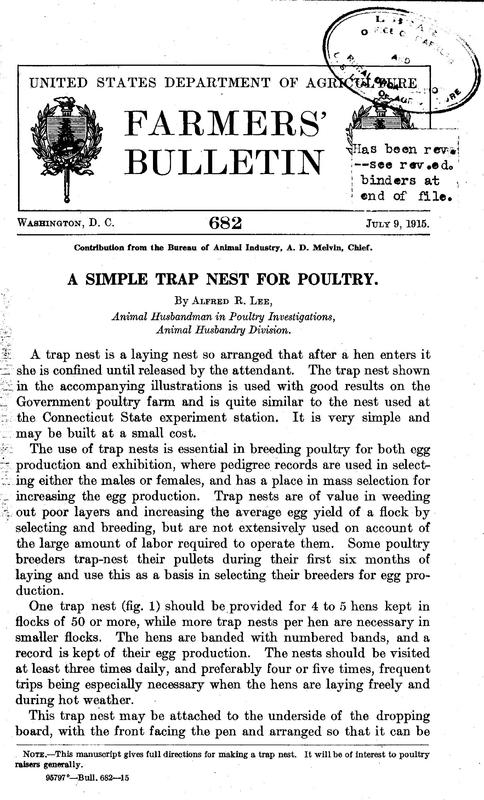
A Simple Trap Nest for Poultry, 1915
Alfred R. Lee
Farmers' Bulletin, Number 682