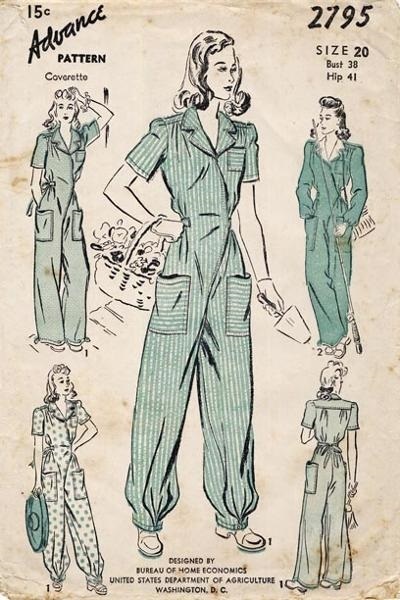
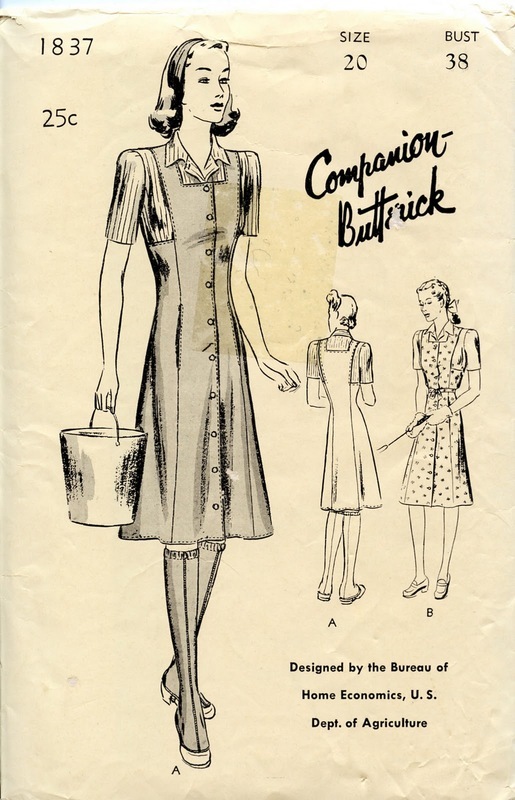
Here are several patterns sold commercially under the Advance and Butterick brands that were designed by the Bureau of Home Economics and the Bureau of Human Nutrition and Home Economics. They were also described, illustrated, and photographed in Bureau publications.
The first group of patterns appeared in Work Clothes for Women (1942). Farmers' Bulletin, Number 1905. U.S. Department of Agriculture
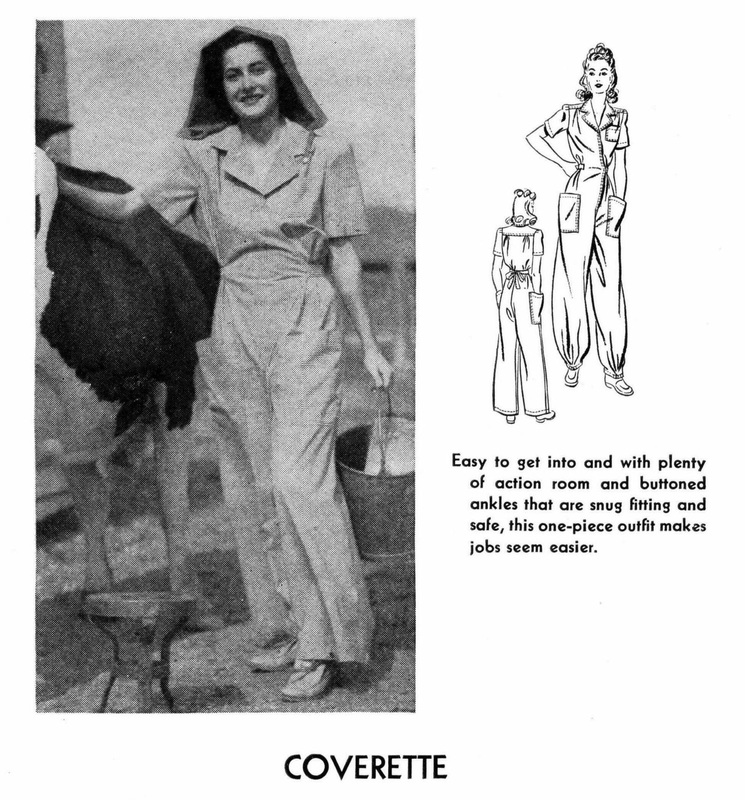
"The surplice coverette is suitable for both indoor and outdoor chores - housecleaning, tending chickens, milking, and gardening. It is an outfit easy to get into — just step into it, pull it up, tie the sash ends, and you are ready for work. For gardening or going up and down steps or ladders, fasten the tabs at each side of the leg over the button at the center front.
This protects from soil and danger of tripping.
In the back, shoulder fullness set well over toward the sleeves below a shallow yoke provides plenty of reaching room. The back of the suit is comfortably long for stooping and bending; yet a boxed cut through the crotch keeps the seat neat in appearance. The low V neckline with an almost flat tailored collar doesn't crowd up around the neck.
The bonnet shown with this suit is a modern version of the old slat style. It snaps together at the back so it can be opened out flat for removing the pieces of cardboard and laundering. The slats are placed crosswise so they can be turned forward to shade the face when working in the sun.
Fold back one or two slats when protection of hair is all that is needed.
Good-quality seersucker is the preferred material — it wears well, is cool, is easy to wash, needs little ironing, and does not wrinkle readily. Also it is heavy enough so that it requires few undergarments and thus cuts down on washings and keeps you cooler." p. 14
A coverall apron, cut on princess lines with built-up sides, is designed for wear over a dress or blouse. The full-length, front opening fastens with snaps which are pounded in with a hammer. Tape inside the front facings reinforces the snaps. Handy pockets, placed in the front seams, are cut in one with the apron and fit so closely they will not catch and tear. All edges, including the lower one, are finished with narrow hems twice-stitched to make the apron strong. This saves material.
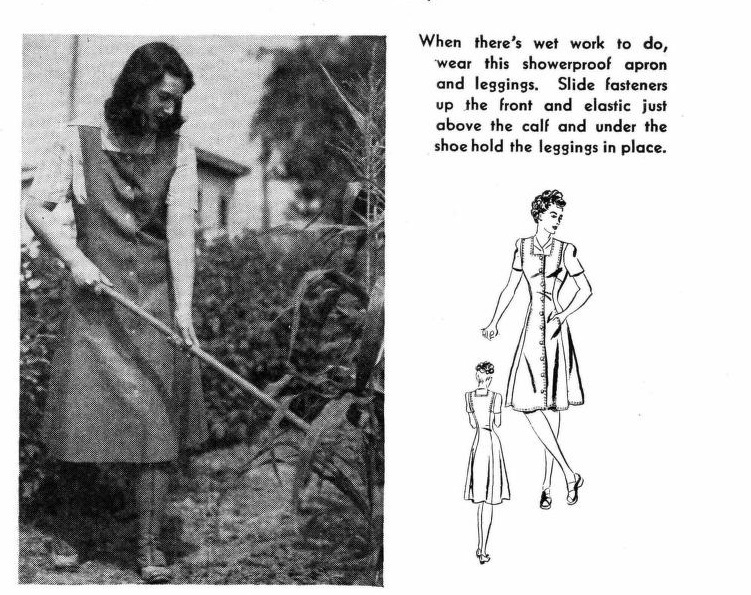
Heavy work chambray, denim, or similar cottons make durable aprons for indoor work. If made of showerproof cotton and with matching fitted leggings, this is a good outfit for wet outdoor jobs — picking vegetables in a damp garden or washing the car. Instead of soaking into the material, water rolls off, and dirt can be wiped off easily. p. 15