
Browse Items: 301
Standard Varieties of Chickens: V. The Bantam Breeds and Varieties
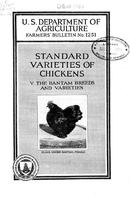
Bantam chickens have a strong appeal to grown people and to children alike. Interest in them is widespread. They are bred extensively for exhibition and are kept also as pets and as utility fowl. The standard breeds and varieties of bantams include such a wide range of shape, color, and other characteristics that any individual taste can be suited…
Standard Varieties of Chickens: IV. The Ornamental Breeds and Varieties
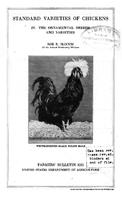
The ornamental breeds and varieties of chickens often have an unusual appeal, and a breeder who may be first attracted to such fowls by their unusual plumage or form may later develop a flock which has decided utility value. Thus the keeping of ornamental breeds and varieties of chickens contributes to pleasure and the possibility of ample reward…
Standard Varieties of Chickens: III. The Asiatic, English, and French Classes
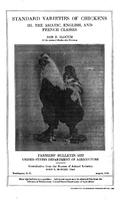
THE BREEDS of chickens included in the Asiatic, English, and French classes are in the main of a relatively large size, and have been developed primarily as meat breeds. They are not so commonly kept in this country as either the general-purpose or the egg breeds. The best-known meat breeds in the United States are those of the Asiatic class.…
Standard Varieties of Chickens: II. The Mediterranean and Continental Classes
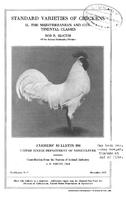
IMPORTANCE OF EGG PRODUCTION.
EGG production doubtless is the leading branch of poultry keeping, and, in addition, is a very important agricultural activity. According to the last census the eggs produced in the United States in 1909 numbered more than 1,591,000,000 dozens, with a value of more than $306,000,000. Eggs, of course, are produced…
EGG production doubtless is the leading branch of poultry keeping, and, in addition, is a very important agricultural activity. According to the last census the eggs produced in the United States in 1909 numbered more than 1,591,000,000 dozens, with a value of more than $306,000,000. Eggs, of course, are produced…
Standard Varieties of Chickens: I. The American Class
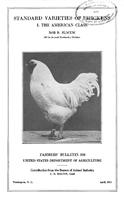
The American class includes the Plymouth Rock, Wyandotte, Java, Dominique, Rhode Island Red, and Buckeye.
The fowls of these breeds are commonly called general- purpose fowls, because they are not only good egg producers but their carcasses are also well suited for the table. They are therefore the breeds best suited for the general farm flock,…
The fowls of these breeds are commonly called general- purpose fowls, because they are not only good egg producers but their carcasses are also well suited for the table. They are therefore the breeds best suited for the general farm flock,…
The Home Chicken Flock
The home chicken flock usually is kept for egg production. It should provide fresh eggs during most of the year.
Before you decide to start a laying flock, you should find out about the zoning ordinances in your area ; if you live in a large city or a suburb, they may forbid poultry keeping.
Before you decide to start a laying flock, you should find out about the zoning ordinances in your area ; if you live in a large city or a suburb, they may forbid poultry keeping.
Genome-wide assessment of worldwide chicken SNP genetic diversity indicates significant absence of rare alleles in commercial breeds
Breed utilization, genetic improvement, and industry consolidation are predicted to have major impacts on the genetic composition of commercial chickens. Consequently, the question arises as to whether sufficient genetic diversity remains within industry stocks to address future needs. With the chicken genome sequence and more than 2.8 million…
Influence of supplemental dietary poultry fat, phytase, and 25-hydroxycholecalciferol on the performance of commercial layers inoculated before or at the onset of lay with F-strain Mycoplasma gallisepticum
The effects of 2 levels of supplemental dietary poultry fat (PF) and the combination of PF, phytase (PHY), and 25-hydroxycholecalciferol (D(3)) on the performance of commercial layers inoculated with F-strain Mycoplasma gallisepticum (FMG) were investigated in 2 trials. Sham and FMG inoculations were administered at 12 (before lay) and 22 (early in…
Ideal Ratios of Isoleucine, Methionine, Methionine Plus Cystine, Threonine, Tryptophan, and Valine Relative to Lysine for White Leghorn-Type Laying Hens of Twenty-Eight to Thirty-Four Weeks of Age
Seven separate experiments were conducted with Hy-Line W-36 hens to determine the ideal ratio of Arg, Ile, Met, Met+Cys, Thr, Trp, and Val relative to Lys for maximal egg mass. The experiments were conducted simultaneously and were each designed as a randomized complete block design with 60 experimental units (each consisting of 1 cage with 2 hens)…
Evaluation of the bacterial diversity in cecal contents of laying hens fed various molting diets by using bacterial tag-encoded FLX amplicon pyrosequencing
Laying hens are typically induced to molt to begin a new egg-laying cycle by withdrawing feed for up to 12 to 14 d. Fasted hens are more susceptible to colonization and tissue invasion by Salmonella enterica serovar Enteritidis. Much of this increased incidence in fasted hens is thought to be due to changes in the native intestinal microflora. An…
Effects of dietary alfalfa inclusion on Salmonella Typhimurium populations in growing layer chicks
Reducing Salmonella in poultry has been a paramount goal of the poultry industry in order to improve food safety. Inclusion of high-fiber fermentable feedstuffs in chicken diets has been shown to reduce the incidence of Salmonella colonization in laying hens, but no work has been performed in growing birds. Therefore, the present study was…
Effects of organic selenium and zinc on the aging process of laying hens
The objective of the study was to determine whether supplementing the diets of post-molted hens with organic selenium (Se) (Sel-Plex®) and/or organic Zinc (Zn) (Bio-Plex®)1 could improve laying hen performance. Prior to molting, 120-78 wk old laying hens were separated into four treatment groups of 30 hens per treatment and were subjected to…
Market Power in Poultry Production Contracting? Evidence from a Farm Survey
The exercise of market power by broiler processing firms (integrators) is plausible because local markets for growers are concentrated and because growers face hold-up risks arising from substantial investments in specific assets set against limited integrator purchase commitments. This article explores the links between local integrator…
Lighting during grow-out and Salmonella in broiler flocks
Background: Lighting is used during conventional broiler grow-out to modify bird behaviour to reach the goals of production and improve bird welfare. The protocols for lighting intensity vary. In a field study, we evaluated if the lighting practices impact the burden of Salmonella in broiler flocks. Methods: Conventional grow-out flocks reared in…
Vitamins A, E and fatty acid composition of the eggs of caged hens and pastured hens
In the US farmers often market pastured poultry eggs for a premium price, claiming animal and human health benefits. We examined how moving pastured hens to forage legumes or mixed grasses influenced hen (Gallus gallus L.) egg omega-3 fatty acids and concentrations of vitamins A and E. We also compared the eggs of the pastured hens to those of hens…
The effect of perches in cages during pullet rearing and egg laying on hen performance, foot health, and plumage
Enrichment of pullet cages with perches has not been studied. Our objective was to determine if access to metal perches during all or part of the life cycle of caged White Leghorns affected egg traits, foot health, and feather condition. Treatment 1 represented control chickens that never had access to perches during their life cycle. Treatment 2…
Effects of Simple and Disposable Chicken Cages for Experimental Eimeria Infections
During experimental Eimeria infections in chickens, facilities are often contaminated by fecal oocysts known to be highly resistant to both chemical and enzymatic treatments. Thus, studies using experimental Eimeria infections have been limited due to the difficulty of complete elimination of residual oocysts from both cages and facilities. To…
Effects of group size and repeated social disruption on the serotonergic and dopaminergic systems in two genetic lines of White Leghorn laying hens
Farm practices such as increasing group size (GS) and mixing unfamiliar chickens may result in repeated social disruption (RSD) and affect the well-being of hens. To examine whether there are genetic differences in response to social stress, 2 genetic strains of White Leghorn hens were used [i.e., high group production and survivability (HGPS) and…
Enterobacteriaceae and related organisms isolated from nest run cart shelves in commercial shell egg processing facilities
Enterobacteriaceae, including Salmonella, may be recovered from foods and processing facilities. High levels of Enterobacteriaceae in the processing plant environment can be an indication of inadequate sanitation. This experiment was designed to determine if nest run egg carts serve as reservoirs for Enterobacteriaceae. Eggs that are produced by…
Vertical Stratification of Ammonia in a Broiler House
The broiler industry is not immune to the problematic nature of NH3 production in animal rearing facilities. Though the headlines of today focus on environmental impact considerations, the detrimental effects of the house air quality on farmers and birds remain considerable for industry viability. This research investigated the vertical…