
Browse Items: 178
Clean Windows, Mirrors, and Other Glass--For a Clean House
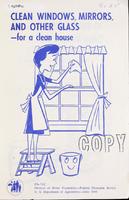
TO CLEAN GLASS
Collect All Tools and Supplies Needed
• Clean cloths for washing, drying, and shining
• Newspaper or paper towels
• Vinegar, ammonia, soap or detergent
• Bucket of warm water
• Whiskbroom or a brush
• A stepladder, step-stool, or sturdy chair (a stepladder is safer)
Collect All Tools and Supplies Needed
• Clean cloths for washing, drying, and shining
• Newspaper or paper towels
• Vinegar, ammonia, soap or detergent
• Bucket of warm water
• Whiskbroom or a brush
• A stepladder, step-stool, or sturdy chair (a stepladder is safer)
A Clean Bathroom--For a Clean House
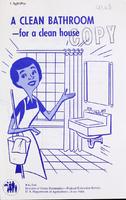
Everyone in the family can help keep the bathroom clean. Each should:
• Turn off faucets.
• Rinse out the sink.
• Hang up towels and washcloths.
• Wash out the bathtub after use.
• Flush the toilet after each use.
• Never put any kind of paper but toilet paper in the toilet.
• Turn off faucets.
• Rinse out the sink.
• Hang up towels and washcloths.
• Wash out the bathtub after use.
• Flush the toilet after each use.
• Never put any kind of paper but toilet paper in the toilet.
Clean Dishes--For a Clean House
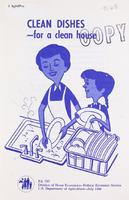
Why Wash Dishes?
• Clean dishes are a part of a clean house.
• Clean dishes help keep your family healthy.
• Dirty dishes carry germs.
• Food looks better on clean dishes.
• Food tastes better when served from clean dishes.
• Clean dishes are a part of a clean house.
• Clean dishes help keep your family healthy.
• Dirty dishes carry germs.
• Food looks better on clean dishes.
• Food tastes better when served from clean dishes.
A Clean House is Important
WHY HAVE A CLEAN HOUSE?
A clean house:
• makes you feel good.
• makes the family feel good.
• helps keep the family healthy.
• makes you proud of your home.
• helps things last longer.
• sets a good example for children.
• helps the neighbors have more respect for you.
• is enjoyed by children and their friends.
A clean house:
• makes you feel good.
• makes the family feel good.
• helps keep the family healthy.
• makes you proud of your home.
• helps things last longer.
• sets a good example for children.
• helps the neighbors have more respect for you.
• is enjoyed by children and their friends.
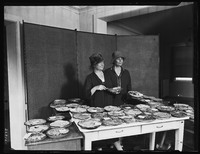
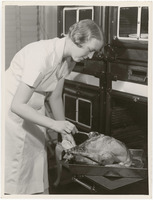
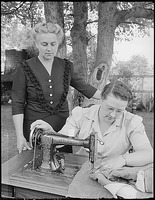
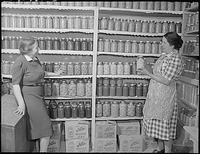
Dusting mits with which dusting can be done with both hands develops speed and efficiency
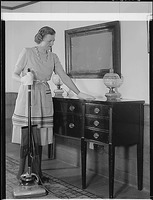
View full record for details.
When To Do House Cleaning Jobs
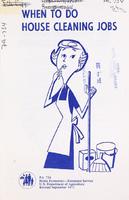
USE THIS LEAFLET TO HELP YOU PLAN YOUR CLEANING.
• Some cleaning jobs need to be done every day.
• Some need to be done once every week,
• Others need to be done only now and then.
Does cleaning wear you out? You may be doing it the hard way!
• Don't try to do too many jobs in one day.
• Look for tools and ways to work that make…
• Some cleaning jobs need to be done every day.
• Some need to be done once every week,
• Others need to be done only now and then.
Does cleaning wear you out? You may be doing it the hard way!
• Don't try to do too many jobs in one day.
• Look for tools and ways to work that make…
Dresses and Aprons for Work in the Home
A well-designed, well-made house dress can give a real lift to homemaking jobs. A poorly designed dress or apron, on the other hand — one that restricts when you reach or bend, that twists or gets in your way as you stoop or climb — can be as fatiguing as a poorly planned kitchen.
On the following pages are dresses and aprons designed by the…
On the following pages are dresses and aprons designed by the…
A Step-Saving U Kitchen
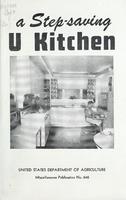
Maximum convenience for the homemaker at her work is the aim of this step-saving kitchen, planned primarily for the farm home. It was designed in housing and household equipment laboratories of the Bureau of Human Nutrition and Home Economics.
Basic plan, — The unbroken U shape was chosen for arranging equipment because it forms a compact…
Basic plan, — The unbroken U shape was chosen for arranging equipment because it forms a compact…
Federal Legislation, Regulations, and Rulings Affecting Cooperative Extension Work in Agriculture and Home Economics
CONTENTS
Legislation concerning land-grant colleges
First Morrill Act
Amendment of first Morrill Act
Second Morrill Act
Source of funds
Nelson amendment
Legislation authorizing cooperative extension work
Smith-Lever Act
Capper-Ketcham Act
Hawaii Act
Alaska Act of 1029
Alaska Act of 1936
Puerto Rico Act
Bankhead-Jones…
Home Demonstration Work
There are over 6,000,000 farm homes in the United States. The women and girls who so largely influence the family life in these homes are endeavoring to develop efficiency in their home-making duties and to find satisfaction for themselves and their families in rural life.
To aid them in this effort, home demonstration work, a Nation-wide…
To aid them in this effort, home demonstration work, a Nation-wide…
The United States Department of Agriculture: Its Structure and Function
In a general policy of conservation and maximum development of the natural resources of the soil and the forests, an important phase is to determine how the resources, when converted into products for use, can best serve people and contribute to human welfare. That is an important function of the Bureau of Home Economics in relation to the whole…
The Time Costs of Homemaking: A Study of 1,500 Rural and Urban Households
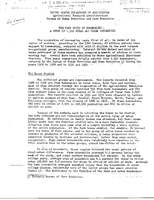
The occupation of homemaking ranks first of all, in terms of the number of workers. According to the 1940 Census, 29 million persons were engaged in homemaking, compared with only 10 million in the next largest occupational group, manufacturing. Interest in the amount and kind of tasks performed by these workers has prompted a number of studies of…
Research on Time Spent in Homemaking: An Annotated List of References
This list of references includes studies of time spent in homemaking in the United States. It includes only research published since 1945, with one exception. This earlier study (listed as the first item because it preceded the others in time) is included because it is still widely referred to, and has been used both as a pattern and as a base of…
Exploratory Studies of Measuring Money Savings and Time Costs of Homemade Clothing
This report presents some of the problems encountered in recent research concerned with one aspect of home production- -the economy of home sewing. A summary of the findings on the time and money costs of making garments at home is included. Information on these costs was reported in somewhat more detail in Rural Family Living, April 1956 and…